
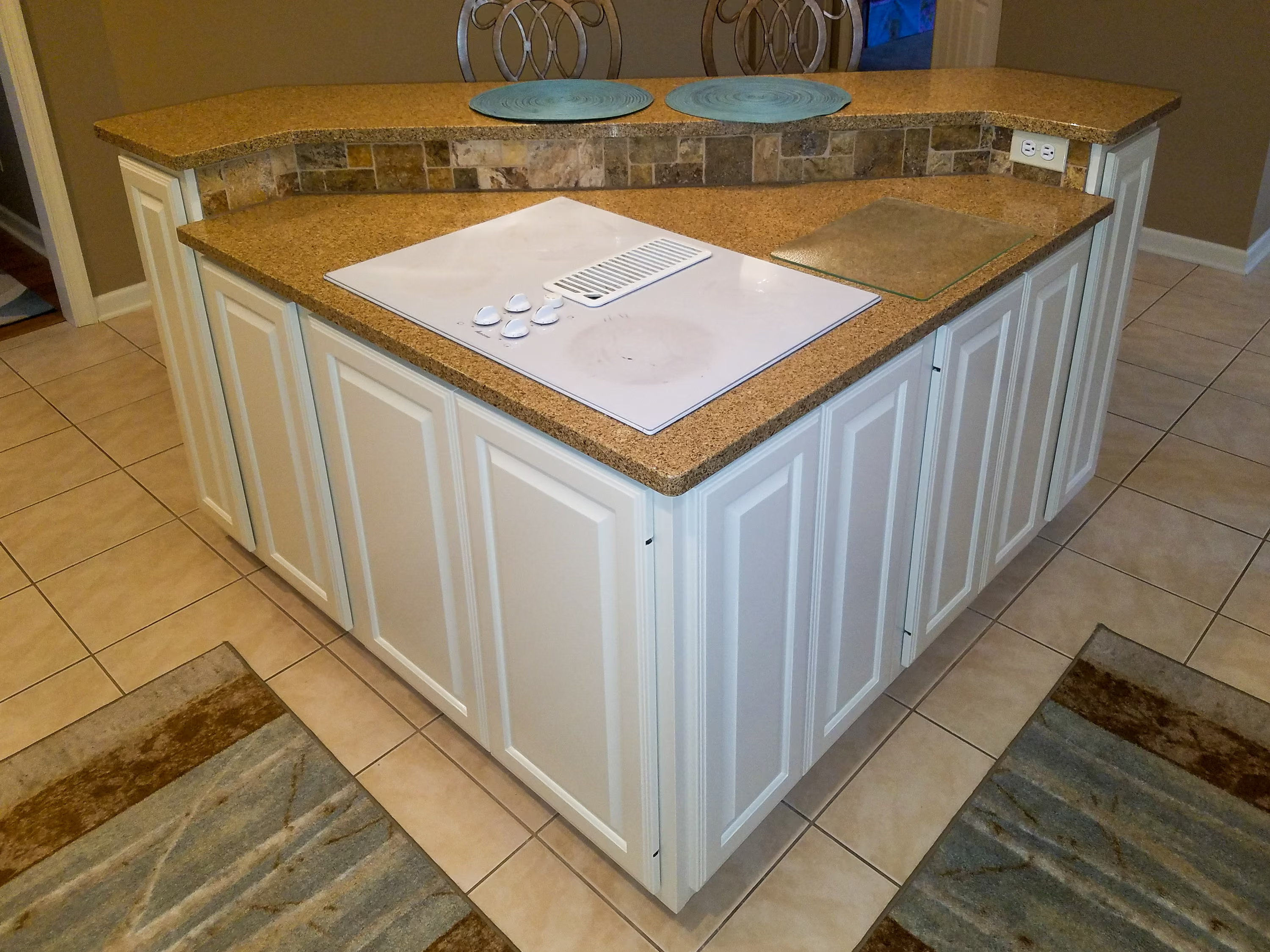
Cabinets are the first thing that draws your attention when entering a kitchen. They quickly and effectively show the attention you've put into making your house your home. A good cabinet with a strong stain grounds the kitchen, mud room, or entry, setting the stage for your personal interior design.
They are also an eye sore when dated, chipped, or discolored.
We've put togehter our guide on how to decide if a cabinet is worth refinishing or replacing below.
Cabinets with solid wood or solid-construction boxes and a finish that's dated, chipping, or discolored are usually strong candidates for refinishing. Cabinets with warped, water-damaged, or structurally failing boxes are often better candidates for replacement, since the labor to correct the underlying damage can approach or exceed the cost of new cabinetry.
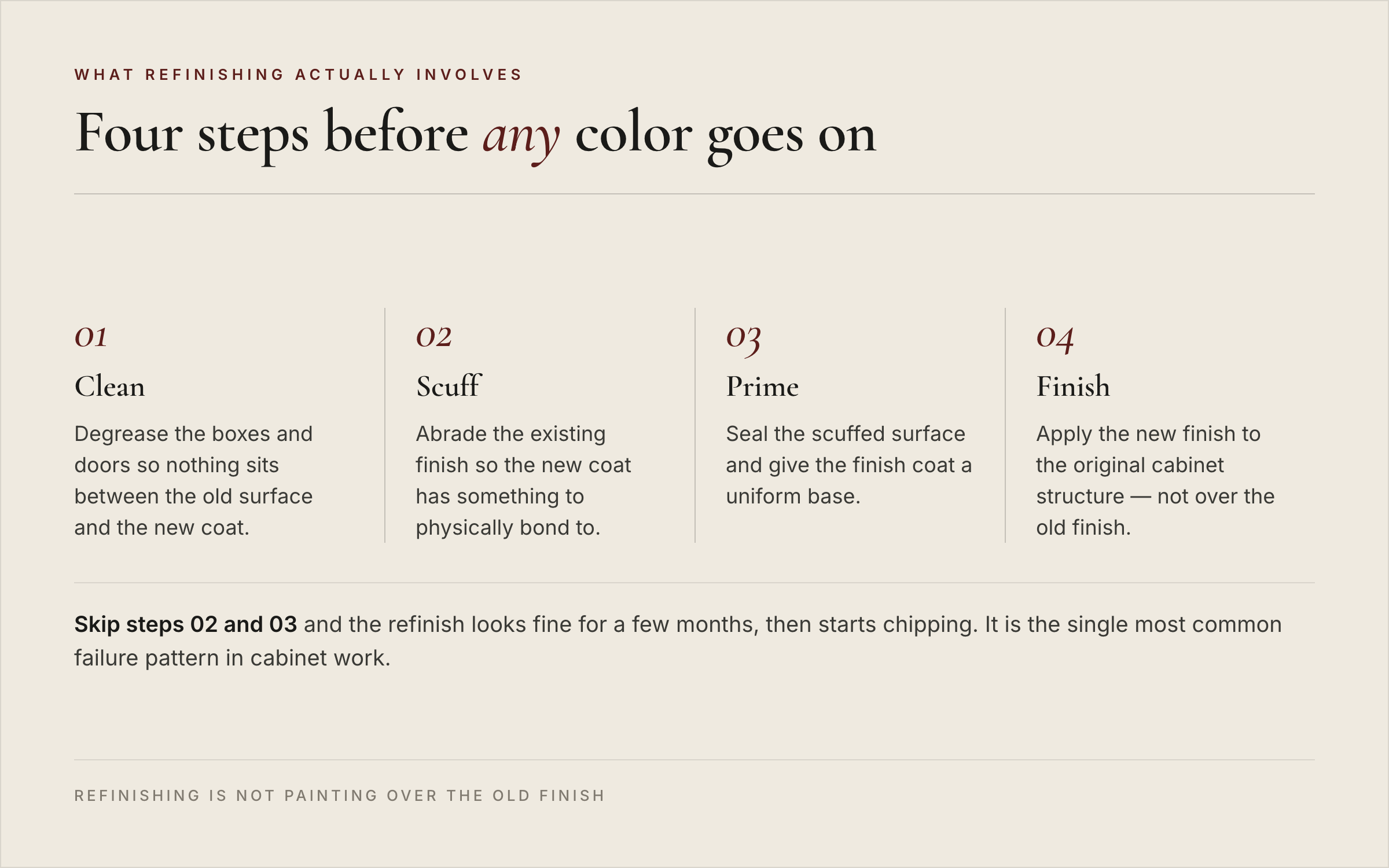
Cabinet refinishing means cleaning, scuffing, and priming the existing boxes and doors before applying a new finish, done correctly, on the original cabinet structure. It is not simply painting over the old finish. Skipping the scuff and prime steps is the most common reason a cabinet refinish looks fine for a few months and then starts chipping, the same failure pattern that shows up whenever prep gets shortcut on any painted surface. See Veenstra Painting's cabinet refinishing page for the full process.
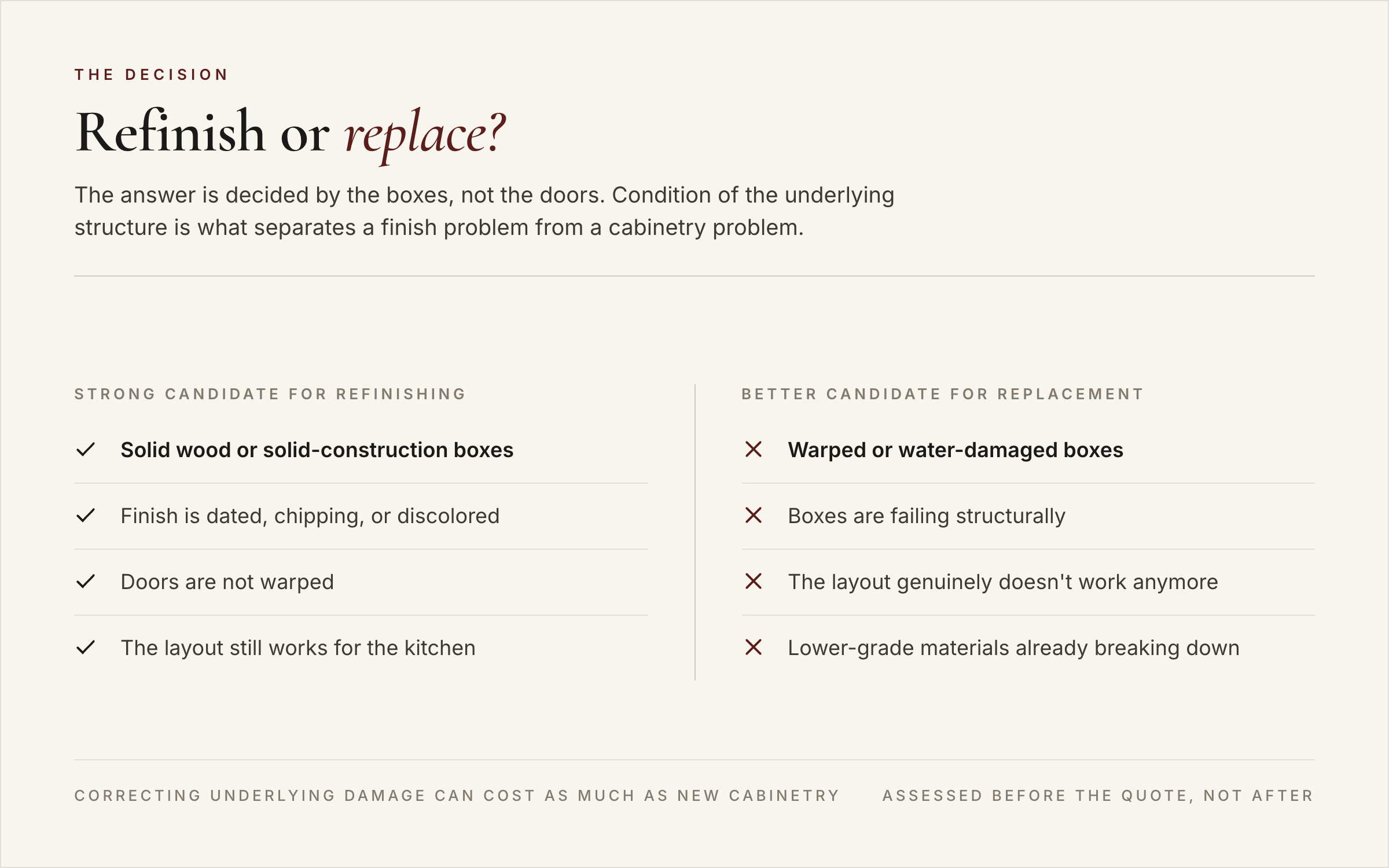
If the cabinet boxes are solid, the doors aren't warped, and the layout still works for how the kitchen is used, refinishing typically costs a fraction of full replacement while delivering a comparable visual result. This is the more common outcome for kitchens built with quality materials that have simply gone out of style or shown wear.
If the boxes have water damage, the layout genuinely doesn't work anymore, or the cabinets were built with lower-grade materials that are failing structurally, refinishing is putting new finish on a problem that will resurface. A contractor doing an honest assessment should tell you this rather than refinishing cabinets that won't hold up regardless of how well the finish is applied.
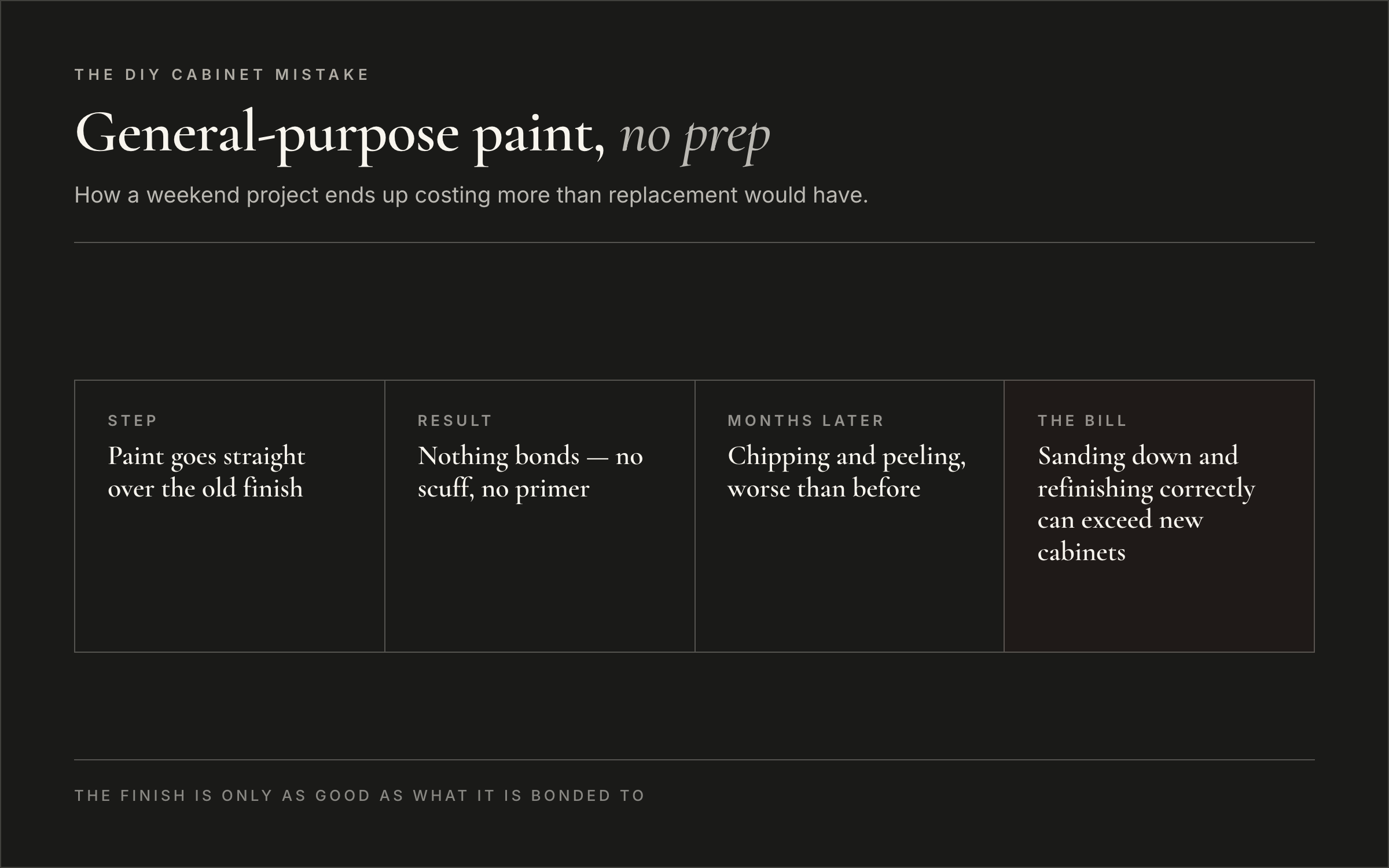
A common and costly mistake is homeowners attempting cabinet refinishing themselves with general-purpose paint and no proper prep. Without scuffing and priming, the new finish doesn't bond to the old surface, and the resulting chipping and peeling can leave cabinets in worse condition than before, sometimes to the point where sanding down and refinishing correctly costs more than new cabinets would have.
How can you tell if cabinets are solid wood or lower-grade material? Solid wood shows a consistent, irregular grain pattern and feels heavier than particleboard or MDF, which usually has a printed wood-grain pattern with visible seams at the door edges. A contractor doing an honest assessment checks this before quoting refinishing or replacement, not after.
Does refinishing lock you into the same cabinet color? No. Refinishing can restore the original color or move to something completely different, since the process strips down to bare wood or a properly scuffed surface either way. The choice comes down to the look you want, not a limitation of the process.
Veenstra Painting has refinished cabinets for homeowners in Pella and Knoxville since 2005, using the same prep standards on every kitchen it touches. See more frequently asked questions or get a cabinet refinishing estimate.