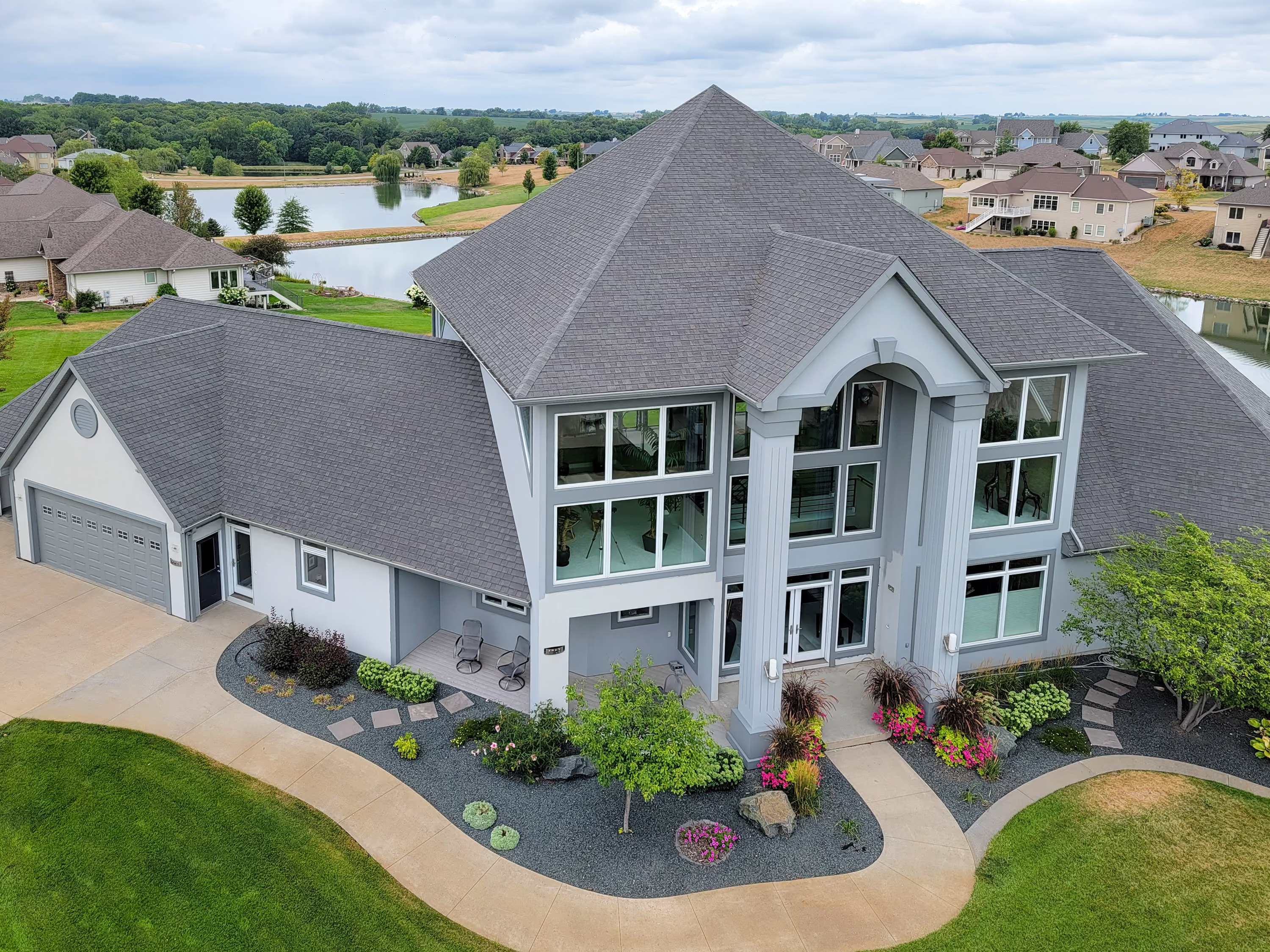
Ask any Midwesterner about their view of the weather and seasons, and you'll typically hear a version of the same expression: "Wait five minutes, and the weather will change." While not completely accurate (we checked), the expression hits on one of the most challenging aspects of owning a home in Iowa—the weather can be harsh on your exterior.
The freeze and thaw cicles, along with heavy spring rains and extreme summer heat, can do a number on the expected longevity of an exterior refresh. Learn more below.
Exterior paint in Iowa typically holds for five to fifteen years, and that spread has less to do with the paint brand than most homeowners assume. What actually decides where a house lands in that range is whether the surface was prepped correctly for whatever was already on it before the crew started.

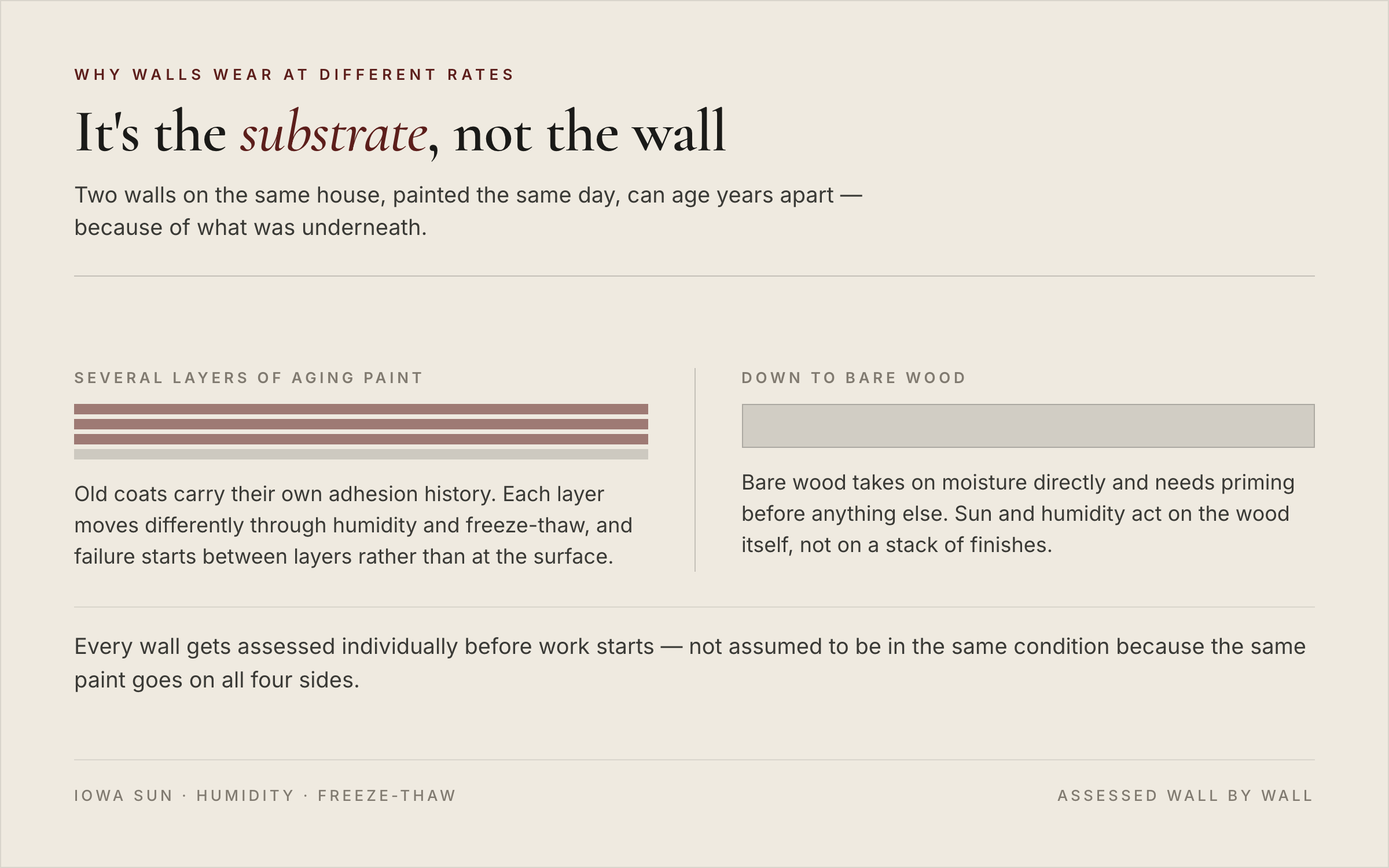
Not every wall on a house ages at the same rate, and the reason isn't which direction it faces. It's what's actually on the surface. A wall with several layers of old, aging paint holds up differently than one that's down to bare wood, and both react differently to Iowa's sun, humidity, and freeze-thaw cycles depending on that history. That's why every wall gets assessed individually before work starts, not assumed to be in the same condition just because the same paint goes on all four sides.
Two decisions determine most of a paint job's lifespan: how the surface was prepped, and what was actually on it before the crew started. Caulking seams, cleaning the surface, and priming correctly are all invisible once the top coat goes on, which is exactly why they're the first things a rushed or price-driven crew skips. See Veenstra Painting's exterior painting page for how prep and product selection work together on every project, and what full prep actually includes across every project type.

Fading, chalking (a powdery residue when you run a hand across the surface), cracking, and peeling are the common signs that a repaint is coming. Peeling in particular usually points to a prep or product issue from the original job rather than simple age, since properly applied paint tends to fade evenly rather than lift off in sheets.
If two painting quotes are far apart in price, prep and product selection are the most likely explanation, not corner-cutting on labor hours alone. Ask what surface preparation is included and whether every wall was actually inspected, not assumed. See how to compare painting quotes without getting burned for the specific questions worth asking.
Does paint brand matter more than application? Application and prep matter more. A premium product applied over a poorly prepped surface will still fail early.
Does paint color affect how long it lasts? Yes. Darker colors absorb more heat and UV than lighter ones, which can accelerate fading and shorten the repaint interval regardless of which wall it's on. Color doesn't change what prep or product a wall needs, just how soon it may need attention again.
Veenstra Painting inspects every wall individually before quoting exterior work, a standard it's held in Pella and Newton since 2005. See more frequently asked questions or learn more about the exterior painting process.