
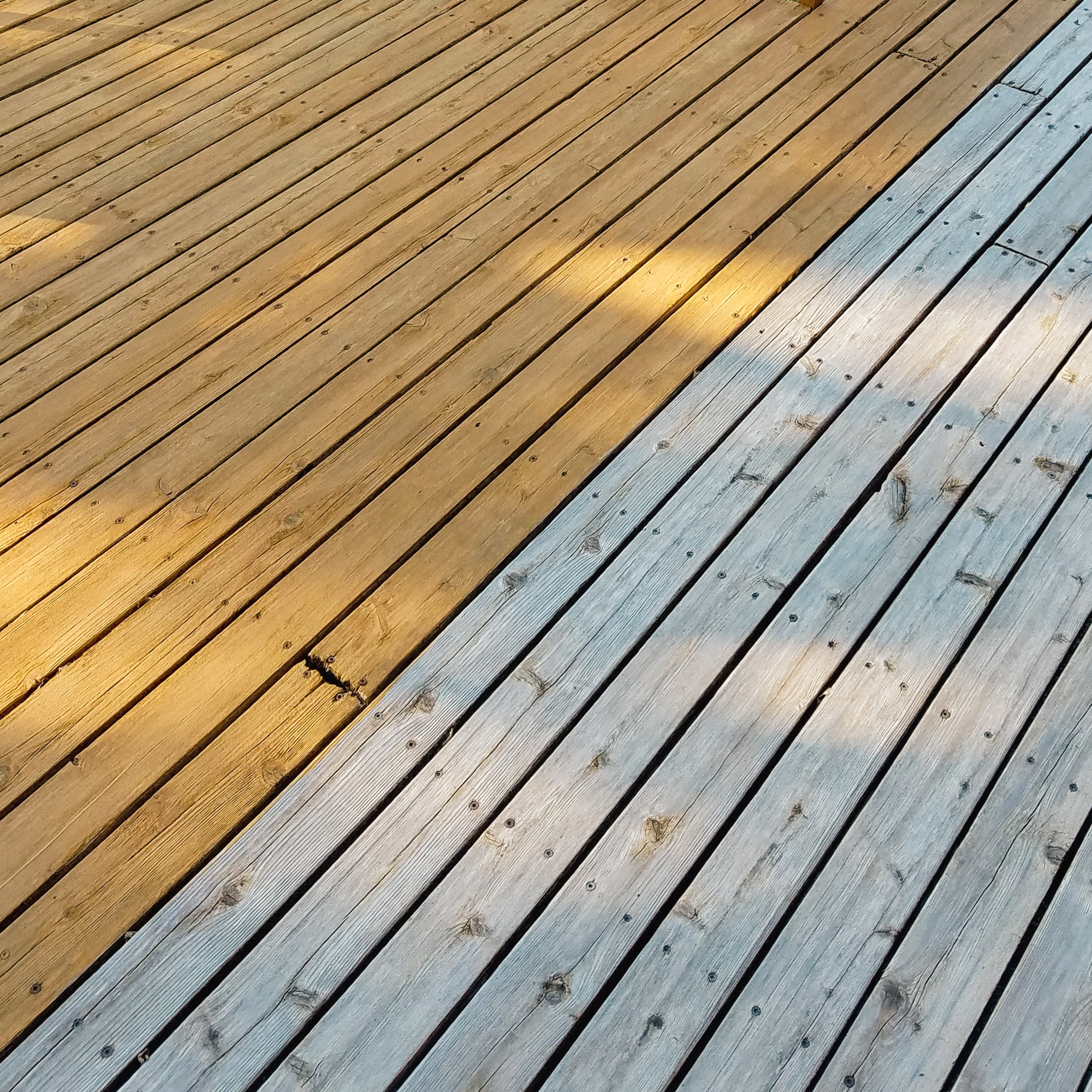
A deck that's graying, feels rough or splintery, or shows water beading unevenly across the surface instead of repelling evenly is showing signs that its protective finish has worn down and it needs attention before winter's freeze-thaw cycle causes further damage.
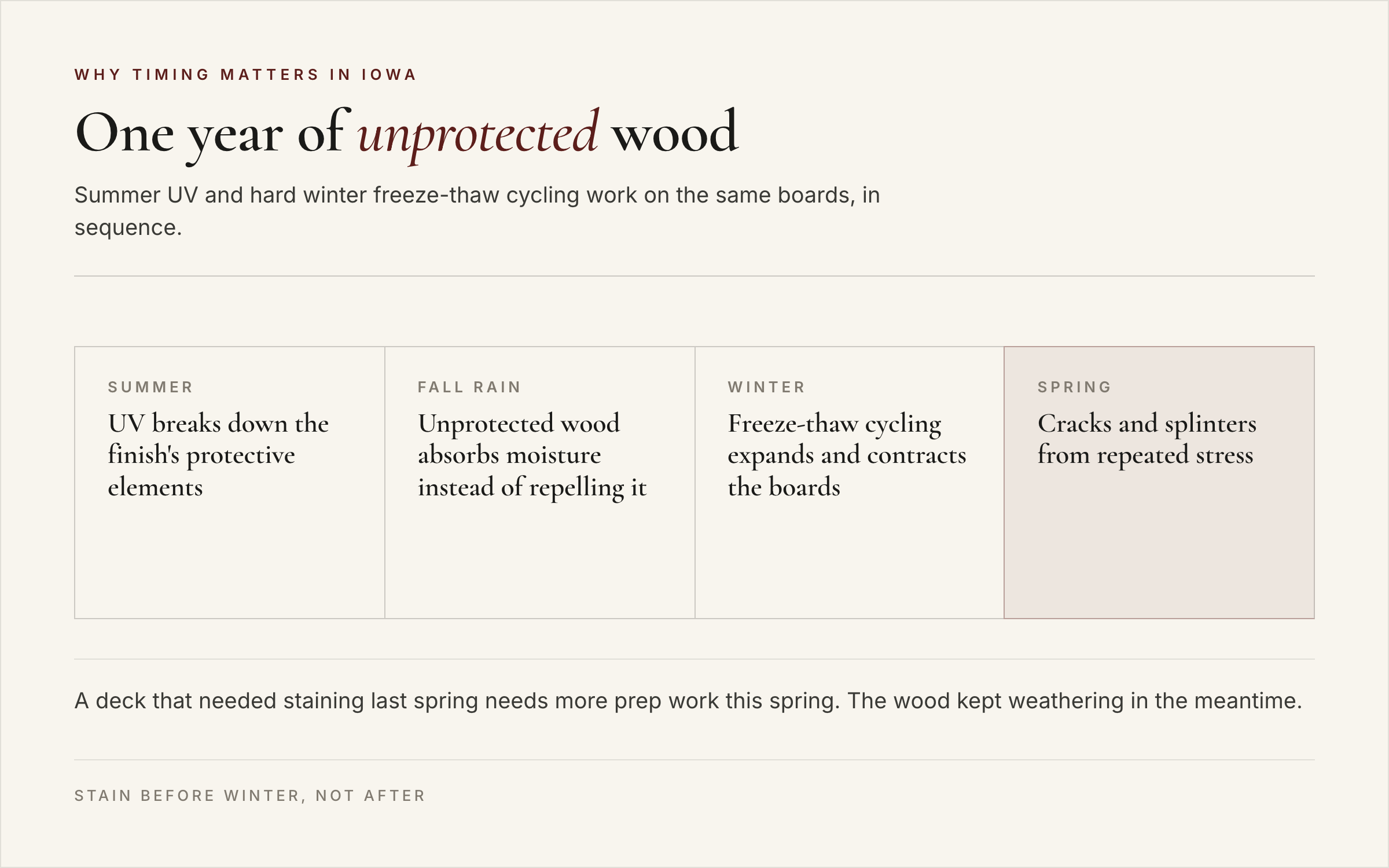
Iowa's climate combines significant summer UV exposure with hard winter freeze-thaw cycling. Unprotected wood absorbs moisture, expands, contracts, and eventually cracks and splinters under that repeated stress. A deck that needed staining last spring generally needs more prep work this spring, since the wood has continued weathering in the meantime.
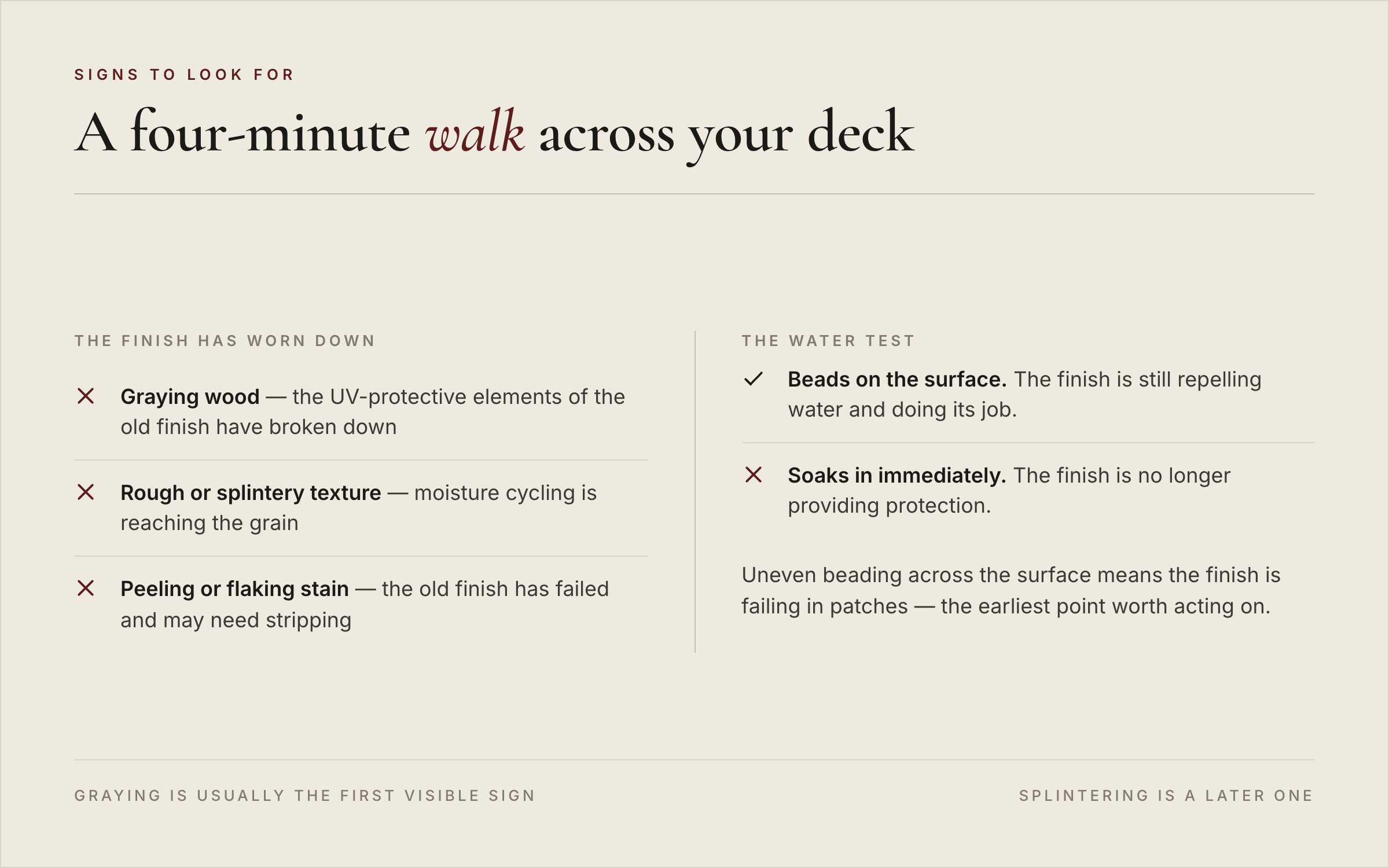
Graying wood is one of the earliest signs, indicating the UV-protective elements of the previous finish have broken down. A rough or splintery surface texture suggests the wood grain is being affected by moisture cycling. Water that beads on the surface is a sign the finish is still working, while water that soaks in immediately is a sign it's no longer providing protection. Peeling or flaking stain means the old finish has failed and will need to be addressed, sometimes requiring stripping, before new product will bond correctly, the same bonding problem that shows up in any project where prep gets skipped.
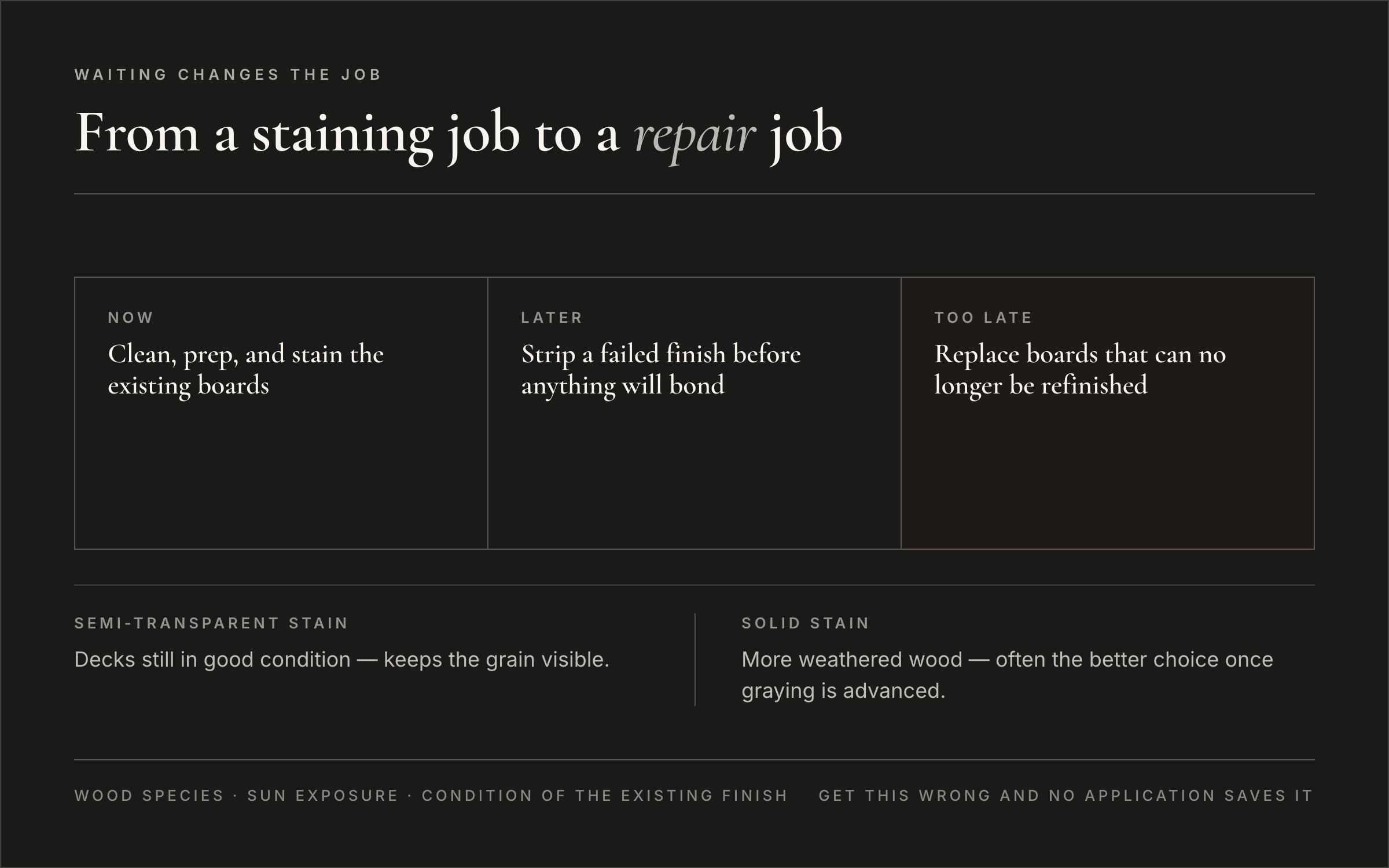
Continued exposure without protection accelerates wood deterioration, and at a certain point the damage moves from a staining job to a repair job, with boards that need replacing rather than refinishing. Addressing a deck earlier in its decline is consistently less expensive than waiting until structural repair is needed. See Veenstra Painting's deck staining page for how the assessment and staining process works.
The right stain depends on the wood species, the deck's sun exposure, and the condition of any existing finish. A semi-transparent stain works well on decks in good condition, while a solid stain is often the better choice for more weathered wood. Getting this wrong means a finish that doesn't hold regardless of how well it was applied.
How often does a deck need to be restained? This varies based on sun exposure, wood type, and the product used, which is why an on-site assessment matters more than a generic timeline.
Can I stain over an old stain that's peeling? Peeling or flaking stain generally needs to be stripped first, since new product won't bond correctly to a failing finish underneath.
Veenstra Painting has been staining decks for homeowners in Pella and Monroe since 2005. See more frequently asked questions or learn more about deck staining.